Recall(Hallmarks #1–4)
Sustaining proliferative signaling (#1), evading growth suppressors (#2), resisting cell death (#3), enabling replicative immortality (#4). All four from the original 2000 paper. This cluster describes the foundational transformation: a cell that was regulated from the outside becomes one that is self-governing — generating its own instructions, ignoring external stop signals, and removing every built-in limit on its own survival and division.
Normal cells exist in a state of negotiated constraint. They grow when instructed to grow, stop when instructed to stop, and die when their continued existence would cause harm. These instructions come from outside — growth factors from neighboring cells, inhibitory signals from the basement membrane, surveillance from the immune system. The cell doesn't decide; it responds.
The first four hallmarks describe the systematic dismantling of that constraint.
Growing and ignoring the brakes
Hallmarks #1 and #2 are mirror images. Proliferative signaling is the accelerator; growth suppressor evasion is the brake. Cancer acquires both not because they're separate problems but because they're coupled: the pathways that transmit growth signals and the pathways that oppose them share components.
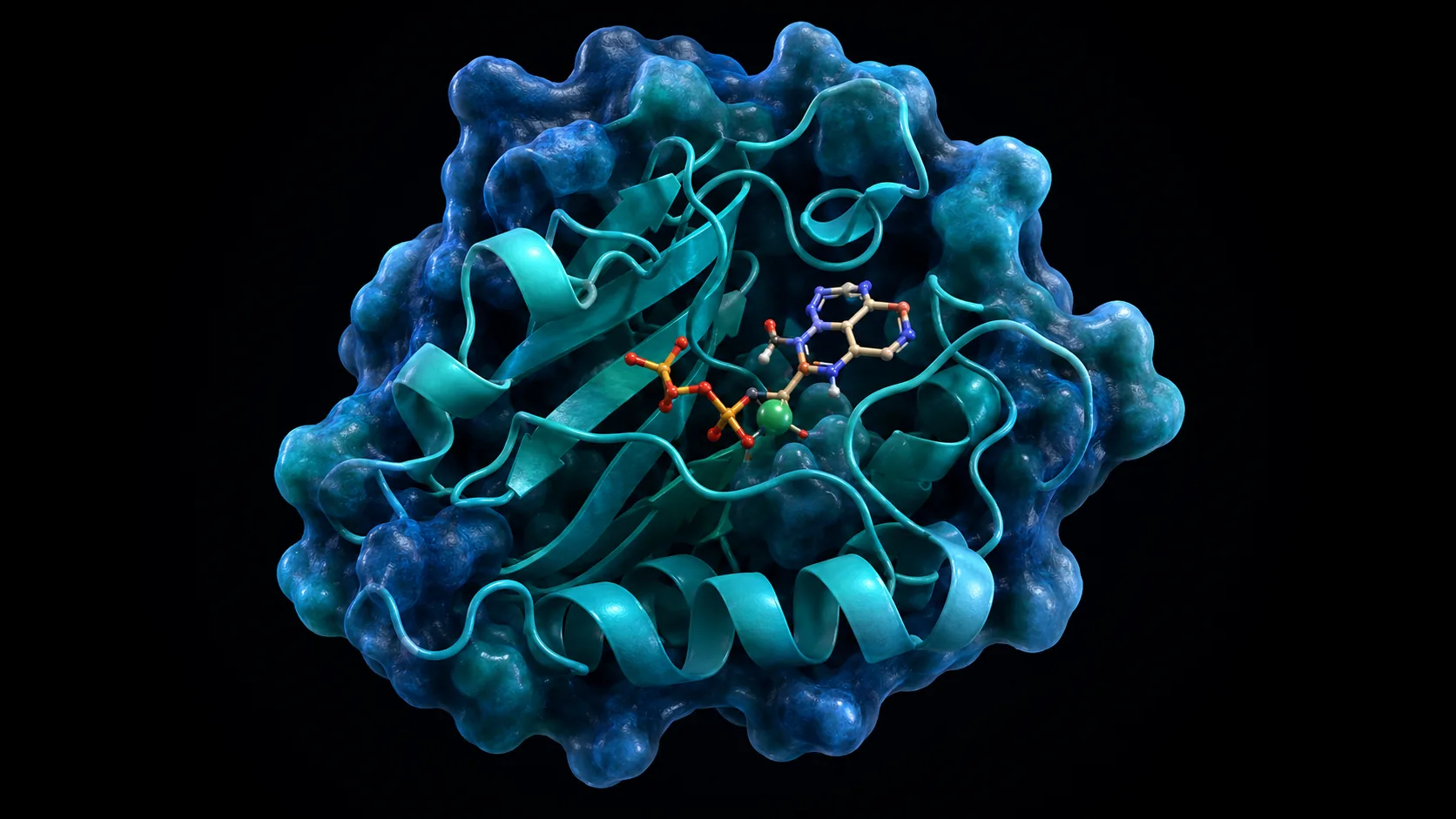
Sustaining proliferative signaling means the cell generates its own growth signals — through autocrine loops, constitutive receptor activation, or mutations in downstream signaling nodes that fire continuously regardless of upstream input. RAS is the canonical example: a GTPase that normally cycles between active (GTP-bound) and inactive (GDP-bound) states, stuck in the active position by a point mutation. One mutation in KRAS creates a signaling node that perpetually tells the cell to grow. It's present in 90% of pancreatic cancers and 40% of colorectal cancers.
Evading growth suppressors removes the counterweights. RB (retinoblastoma protein) is the gatekeeper of the G1/S checkpoint — the decision point at which a cell commits to dividing. In its active, hypophosphorylated state, RB sequesters E2F transcription factors and prevents entry into S phase. CDK4/6 phosphorylate and inactivate RB in response to mitogenic signals, releasing E2F. Cancer inactivates RB directly (deletion, mutation) or inactivates it indirectly (CDK4/6 amplification, loss of p16/CDKN2A which normally keeps CDK4/6 in check).
Intuition(Why both hallmarks are almost always present together)
You can't just turn on the accelerator without disabling the brake — the brake is triggered by the same signals. Oncogenic RAS activation at physiologic levels triggers p16 and p53 — a protective response called oncogene-induced senescence that arrests the cell before it can become malignant. For the cell to escape, it must simultaneously silence the growth suppressor response. This is why RAS mutations and p16/p53 loss co-occur so consistently in pancreatic cancer: one is the accelerator, the other is the brake that had to be cut first.
The shared pathway logic also explains why the same drugs hit both: CDK4/6 inhibitors (palbociclib, ribociclib, abemaciclib) restore RB function by blocking the kinases that phosphorylate it — directly addressing hallmark #2 while slowing the mitogenic output of hallmark #1.
The cell that won't die
Acquiring autonomous growth signals is necessary but not sufficient. Every cell has a built-in failsafe: if growth signals are aberrant, the apoptosis machinery is supposed to activate and eliminate the cell. Hallmark #3 is the cancer cell disabling that failsafe.
Resisting cell death operates through multiple mechanisms that track directly onto the apoptosis pathways:
The intrinsic pathway — driven by mitochondrial outer membrane permeabilization — is governed by the BCL-2 family. Pro-apoptotic members (BAX, BAK, BIM, PUMA, NOXA) push toward death; anti-apoptotic members (BCL-2, BCL-XL, MCL-1) push toward survival. Cancer tips this balance: BCL-2 is overexpressed in follicular lymphoma through the t(14;18) translocation; MCL-1 is amplified in multiple myeloma and many solid tumors. Venetoclax, which directly inhibits BCL-2, works because it restores the apoptotic sensitivity that BCL-2 overexpression had suppressed.
The extrinsic pathway — activated by death ligand signaling (TRAIL, FasL) — is frequently disabled through loss of death receptors, caspase-8 mutation, or upregulation of FLIP (an inhibitor of caspase-8 processing).
p53 sits above both pathways as the sensor and transducer of genotoxic stress into apoptosis. It is the most frequently mutated gene in human cancer — lost in over 50% of all tumors — precisely because it is the common sensor for the aberrant signals that #1 and #2 generate.
Example(The BH3 mimetic logic)
Anti-apoptotic BCL-2 family proteins function as sponges for the pro-apoptotic proteins that would otherwise trigger death. Cancer cells that overexpress BCL-2 are said to be "primed for death" — they have high levels of pro-apoptotic proteins sequestered by BCL-2, and are just one displacement away from apoptosis. BH3 mimetics (venetoclax, navitoclax) release those sequestered proteins by occupying the binding groove of BCL-2/BCL-XL. The cancer cell is already at the edge; the drug just removes what was holding it back. This is why BCL-2-overexpressing CLL and follicular lymphoma respond so dramatically to venetoclax — the apoptotic machinery is loaded and waiting.
The clock that stops
Even with growth signals, suppressor evasion, and death resistance, a normal cell has one more constraint: the Hayflick limit. Each division shortens telomeres, and after 50–70 divisions the telomeres are too short to protect chromosome ends. The cell enters senescence or crisis.
Enabling replicative immortality requires solving the telomere problem. In ~85% of cancers, this happens through re-activation of telomerase — the reverse transcriptase that extends telomeres and is normally silenced in adult somatic cells. TERT promoter mutations (C228T, C250T) are the most common non-coding mutations in cancer, found in melanoma, glioblastoma, bladder cancer, and others — creating new binding sites for transcription factors that drive TERT expression.
The remaining ~15% use alternative lengthening of telomeres (ALT), a recombination-based mechanism that doesn't require telomerase at all. ALT-positive tumors are enriched in cancers of mesenchymal origin (sarcomas, glioblastoma subsets) and tend to have mutations in ATRX and DAXX, which normally suppress recombination at telomeric repeats.
The internal logic of the group
These four hallmarks describe a progression:
- The cell stops waiting for growth instructions (#1)
- The cell ignores instructions to stop (#2)
- The cell ignores instructions to die (#3)
- The cell removes its final division limit (#4)
Each step is insufficient without the others — which is why they co-occur. A cell with autonomous growth signaling but intact apoptosis typically triggers its own death through p53 activation. A cell with BCL-2 overexpression but no proliferative signal doesn't grow. Replicative immortality is only relevant once the cell is growing and surviving. The four hallmarks are not sequential requirements; they are a mutually reinforcing set that cancers acquire as a package, in various orders and through various mechanisms, with each acquisition increasing the selection pressure for the next.
Summary(Summary)
Hallmarks #1–4 describe the cancer cell becoming self-governing: generating its own growth signals, ignoring growth suppressor circuits, disabling apoptotic failsafes, and eliminating the telomere limit on division count. They are deeply interconnected — the same signaling pathways run through all four, and the acquisition of each one creates selection pressure for the others. The therapeutic corollary is that blocking any single one is insufficient for durable control; the cell has already acquired, or will rapidly acquire, the remaining three. CDK4/6 inhibitors, BCL-2 inhibitors, and TERT-targeting approaches each address one piece of this quartet — but combination strategies targeting multiple nodes simultaneously are what durable responses require.