Recall(Added in 2011)
The original 2000 hallmarks didn't include immune evasion — not because it wasn't recognized, but because the evidence was still being assembled. By 2011 the picture was clear enough to formalize: the immune system is a genuine barrier to tumor development, and every established tumor has found ways around it.
The immune system eliminates cancer cells far more often than it fails. Most neoplastic cells are detected and destroyed before they can establish a tumor — through a process called cancer immunosurveillance. The cancers that develop are, by definition, the ones that successfully evaded this surveillance. Understanding immune evasion is understanding what made those cells special.
The three Es: Elimination, Equilibrium, Escape
The modern framework for tumor-immune interaction is the three Es — a progression that most tumors go through over time.
Definition(Cancer immunoediting (the three Es))
A framework describing the evolving relationship between tumors and the immune system. Elimination: the immune system detects and destroys early neoplastic cells. Equilibrium: some tumor variants survive elimination, entering a state of dynamic balance where immune pressure suppresses growth but doesn't eradicate the tumor — this phase can last years to decades. Escape: tumor variants emerge that actively evade immune control, leading to clinical disease.
The equilibrium phase is clinically significant. Dormant micrometastases held in check by immune pressure can escape years later — after immunosuppression from disease, age, or therapy. Organ transplant recipients on immunosuppressants have dramatically elevated cancer risk, partly from donor-transmitted dormant tumors that escape once immune surveillance is reduced.
What the immune system uses to recognize cancer
Cytotoxic T cells (CTLs) are the primary executioners of cancer immunosurveillance. They recognize peptide fragments — antigens — presented on MHC class I molecules on the tumor cell surface. These antigens can be:
- Neoantigens: peptides derived from tumor-specific mutations, not present in normal tissue
- Cancer-testis antigens: proteins normally expressed only in germline tissue (MAGE, NY-ESO-1), reactivated in tumors
- Overexpressed self-antigens: normal proteins expressed at abnormally high levels (HER2, survivin)
- Viral antigens: in virus-associated cancers (HPV E6/E7 in cervical cancer, EBV antigens in some lymphomas)
Mutational burden matters here — tumors with more mutations generate more neoantigens, giving T cells more targets. This is why tumor mutational burden (TMB) has emerged as a biomarker for immunotherapy response: hypermutated tumors (microsatellite-instable colorectal cancer, melanoma, lung cancer in smokers) tend to respond better to checkpoint inhibitors.
How tumors escape: the main mechanisms
1. Antigen loss and MHC downregulation
The simplest escape is to hide. If a tumor cell stops presenting the antigen that T cells are recognizing — by losing the mutation, silencing the antigen gene, or downregulating MHC class I expression — it becomes invisible to CTLs.
MHC class I downregulation is extremely common in cancer: found in 40–90% of tumors depending on type. The mechanisms include loss of beta-2-microglobulin (B2M, a required MHC I component), downregulation of antigen-processing machinery (TAP1/2, tapasin), and epigenetic silencing.
This is also a mechanism of acquired resistance to checkpoint inhibitors — tumors that initially respond often relapse through B2M loss or antigen escape variants that aren't recognized by the primed T cells.
2. Exploiting immune checkpoints
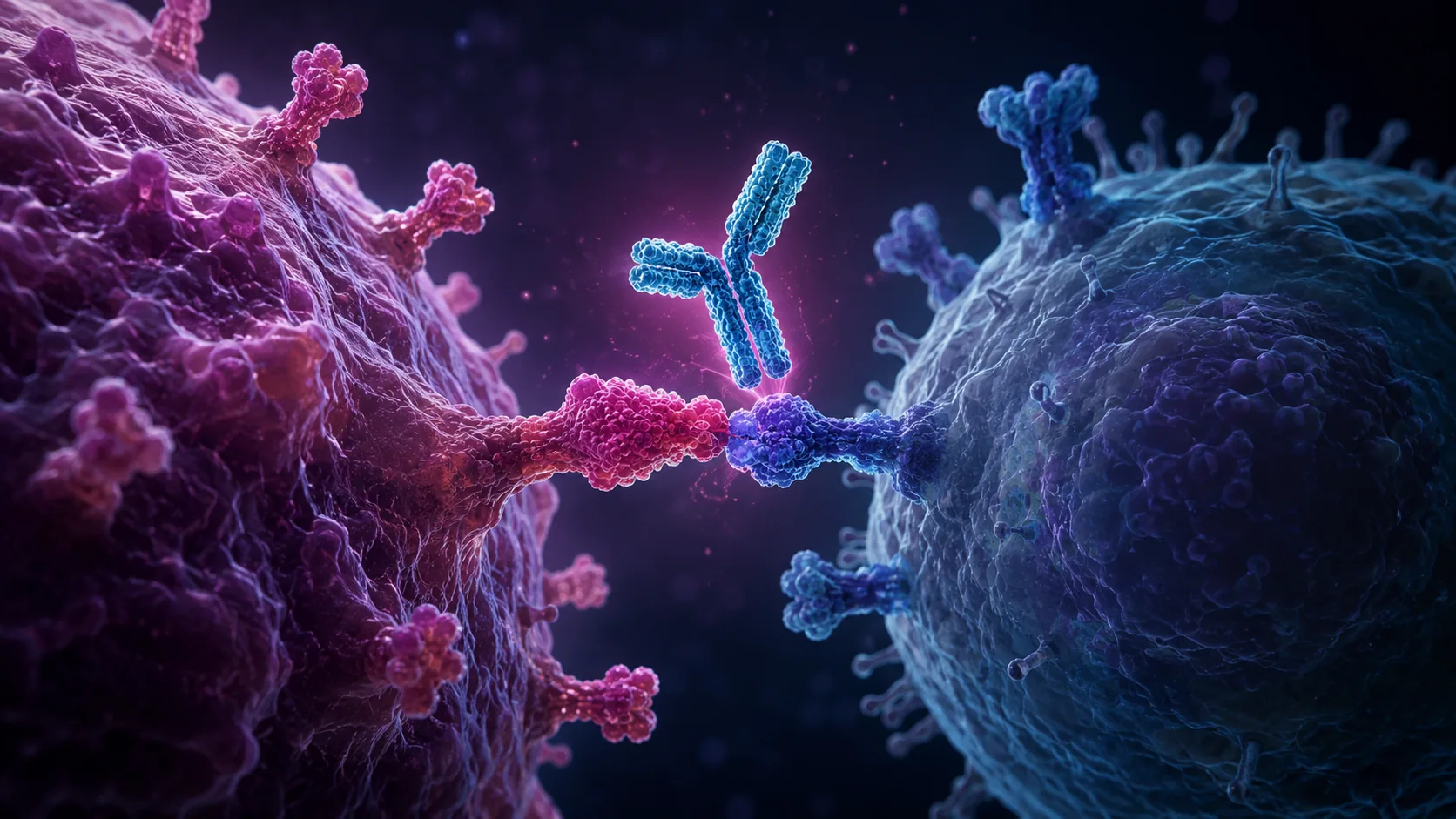
Even when T cells can see a tumor, they can be switched off. T cell activation requires not just TCR engagement with antigen but co-stimulatory signals. Immune checkpoints are the inhibitory counterparts — signals that dampen T cell activity to prevent autoimmunity.
Tumors exploit these checkpoints to suppress T cells in the tumor microenvironment:
Definition(PD-1/PD-L1 axis)
PD-1 (programmed death-1) is an inhibitory receptor expressed on activated T cells. Its ligands PD-L1 (CD274) and PD-L2 are expressed on tumor cells, stromal cells, and immune cells in the tumor microenvironment. PD-1/PD-L1 engagement delivers an inhibitory signal that suppresses T cell cytotoxicity, proliferation, and cytokine production — essentially turning off the T cell while it's engaging the tumor. PD-L1 expression on tumors is frequently driven by IFN-γ secreted by T cells themselves, creating a feedback loop where immune attack triggers the tumor's own suppression.
Definition(CTLA-4)
Cytotoxic T-lymphocyte-associated protein 4, an inhibitory receptor that competes with CD28 (activating co-receptor) for binding to B7 ligands (CD80/CD86) on antigen-presenting cells. CTLA-4 has higher affinity for B7 than CD28, so its expression dominates — damping T cell activation in lymph nodes, where priming occurs. Anti-CTLA-4 therapy (ipilimumab) acts primarily in the lymph node, while anti-PD-1/PD-L1 acts primarily in the tumor microenvironment.
Checkpoint inhibitors — antibodies blocking PD-1, PD-L1, or CTLA-4 — are among the most significant advances in oncology in the past two decades. They produce durable responses in a fraction of patients across many tumor types. The challenge is that most patients don't respond, and understanding why is an active area of research.
3. Creating an immunosuppressive microenvironment
Beyond direct T cell suppression, tumors remodel the entire immune landscape of the tumor microenvironment (TME) to favor tolerance:
Regulatory T cells (Tregs) are recruited by CCL22/CCL17 secreted by tumors and suppress effector T cell activity through IL-10, TGF-β, and direct contact. High Treg infiltration correlates with poor prognosis in many cancer types.
Myeloid-derived suppressor cells (MDSCs) are immature myeloid cells that expand in cancer-bearing hosts and suppress T and NK cell function through multiple mechanisms — arginase-1 (depleting arginine needed for T cell function), reactive oxygen species, and IL-10.
Tumor-associated macrophages (TAMs) are polarized toward an anti-inflammatory (M2-like) phenotype by tumor-derived signals (IL-4, IL-13, M-CSF), where they support tumor growth, angiogenesis, and immune suppression rather than tumor killing.
IDO1 (indoleamine 2,3-dioxygenase) catabolizes tryptophan — an amino acid essential for T cell function. Tumors expressing IDO1 create a local tryptophan-depleted microenvironment that starves T cells metabolically.
Example(Why checkpoint inhibitors work better in inflamed tumors)
Tumors can be broadly classified as "hot" (immune-inflamed, with abundant T cell infiltration) or "cold" (immune-excluded or desert, with few infiltrating T cells). Checkpoint inhibitors work primarily in hot tumors by releasing the brakes on already-present T cells. Cold tumors are resistant because there's nothing to unleash — the T cells never got in. Current research focuses on converting cold tumors to hot ones through combination strategies: radiation, oncolytic viruses, STING agonists, and other approaches that create immunogenic cell death and drive T cell recruitment before checkpoint inhibition.
4. NK cell evasion
Natural killer (NK) cells provide a complementary layer of surveillance — they don't require antigen presentation and specifically target cells with low MHC class I expression (the "missing self" signal). This means tumors that downregulate MHC I to hide from T cells become more visible to NK cells — a tradeoff.
Tumors evade NK cells by:
- Upregulating MHC I or non-classical MHC (HLA-E, HLA-G), which engage inhibitory NK receptors
- Shedding NKG2D ligands (MICA/MICB) — soluble ligands that engage and downregulate NKG2D on NK cells, blunting their activation
- Expressing CD47 ("don't eat me" signal) that inhibits phagocytosis and NK killing
Note(This is where the research connects)
Several of the published studies in this series connect directly to hallmark #8. Atf7ip, TSC1/TSC2, and Nemvaleukin alfa all relate to immune evasion or immune activation in the tumor microenvironment — the mechanisms by which tumors suppress or evade the immune response, and how therapeutic approaches try to reverse that suppression. A separate series will cover those papers in depth.
The cancer-immunity cycle
The full picture integrates into a cycle: tumor antigens are released, taken up by dendritic cells, presented to T cells in lymph nodes, T cells traffic to the tumor, infiltrate, recognize tumor cells, and kill them — releasing more antigens and amplifying the cycle. Tumors interrupt this cycle at multiple steps simultaneously: poor antigen presentation, poor dendritic cell activation, T cell exclusion from the tumor, checkpoint-mediated suppression at the tumor site.
Effective immunotherapy needs to restore the cycle, not just unblock one step.
Summary(Summary)
The immune system eliminates most nascent tumors through cancer immunosurveillance — the cancers that develop have passed through immunoediting and acquired evasion mechanisms. These include antigen loss and MHC downregulation (hiding from T cells), checkpoint exploitation via PD-L1 and CTLA-4 (switching off T cells that do arrive), construction of an immunosuppressive microenvironment (Tregs, MDSCs, M2 macrophages, IDO1), and NK cell evasion through HLA-E/G upregulation and NKG2D ligand shedding. Checkpoint inhibitors have transformed outcomes in a subset of patients by restoring T cell function, but most patients don't respond — because checkpoint blockade only works when T cells are present and the tumor is antigen-rich. The frontier is converting immunologically cold tumors to hot ones through combination strategies that drive T cell recruitment before or alongside checkpoint inhibition.